What to pack in your hospital bag for delivery: the complete checklist
Most hospital bag lists online are written for hospitals in another country. This one is written for delivering in India — where the paperwork matters more than anyone warns you, where someone will be staying overnight with you, and where the answer to "do they give you pads?" is usually no.
- Third trimester
- Hospital & delivery
- Checklists
- First-time mothers
Listen to this guide
23 minutes · 13 chapters
Introduction
Chapter 1 of 13
Read by a synthetic voice from the text of this article. Nothing is said in the audio that is not written above.
The short version
- Pack by the end of week 34. About one in ten babies arrive before 37 weeks, and packing is not something you want to be doing during contractions.
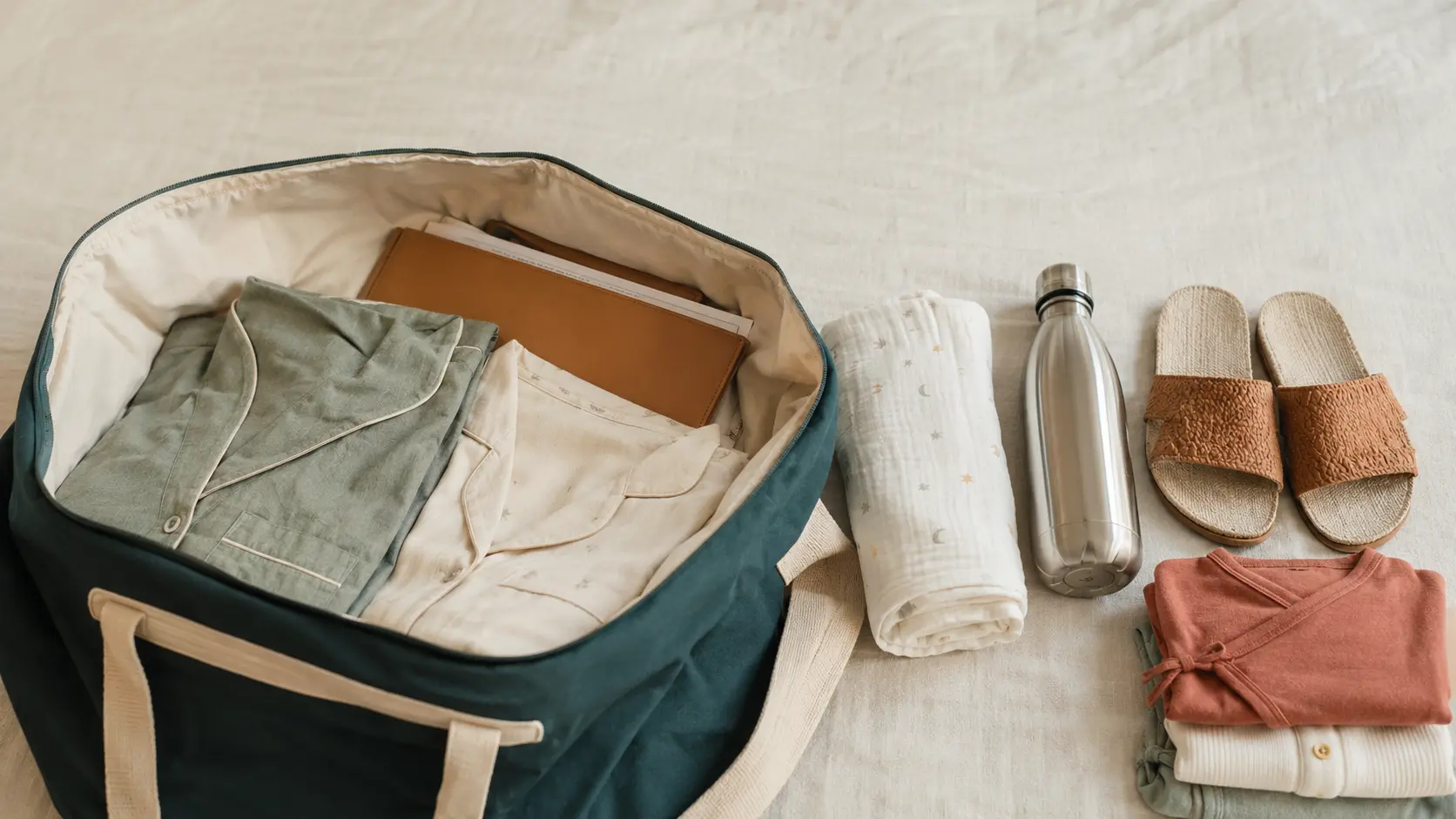
- Pack three separate bags: one small one for labour, one for the days after, and one for the baby. Keep the labour bag and the document folder within reach in the car.
- Carry your own maternity pads, adult-size disposable underwear and a nightgown that opens at the front. Most Indian hospitals do not supply these.
- The document folder matters more than the clothes: hospital registration card, ID, insurance or TPA pre-authorisation papers, blood group report and every scan you have had.
- Pack a separate bag for whoever is staying overnight with you. In Indian hospitals someone almost always does, and no one plans for them.
- For a planned C-section, add high-waisted underwear that sits above the incision, an abdominal binder if your doctor advises one, and plan for a longer stay.
When should you pack your hospital bag?
Have the bag packed and standing by the door by the end of week 34. Not week 38, which is the number most lists give you.
The reasoning is simple. A pregnancy is considered full term from 37 weeks, but roughly one baby in ten in India arrives before that. If yours is one of them, the difference between a packed bag and an unpacked one is whether your first hour of labour is calm or frantic. And packing early costs you nothing — the bag simply sits there.
There is a second reason, and it is the one first-time mothers tend to discover the hard way: by week 36 most women are genuinely uncomfortable. Bending, reaching into cupboards and standing at the cot folding clothes is not what you want to be doing then. Do it while it is still easy.
Before you pack anything, ask your hospital one question
What hospitals in India provide varies enormously — not just between a government hospital and a private one, but between two private hospitals on the same road. Some give you a delivery kit with everything down to the baby's first clothes. Others hand you a gown and expect the rest from you.
So before you buy a single thing, call the labour ward or ask at your next appointment: what does the hospital provide, and what should we bring? Two minutes on the phone will save you a bag you did not need to carry, and will catch the one thing you would otherwise have been missing.
These are the items worth asking about by name, because they are the ones that most often fall between the two answers:
| Ask specifically about | Why it catches people out |
|---|---|
| Maternity pads | Frequently not supplied, and you will need far more than you expect in the first 48 hours. |
| Adult disposable underwear | Some hospitals provide a few pieces, most provide none. Either way, bring your own. |
| Baby's clothes and nappies | Many hospitals supply the first set only. Some supply nothing at all. |
| Blanket or swaddle for the baby | Almost never supplied for the journey home, which is exactly when it is needed. |
| Meals for the attendant | Your meals are usually covered. The person staying with you is usually not. |
| Whether you can keep a bag in the room | Some wards have very little storage, which changes how much you should bring in at once. |
Pack three bags, not one
A single large suitcase is the most common mistake, and it fails at the worst moment. During labour, someone will be looking for a hair tie while you are having a contraction. Nobody wants to be unzipping a full suitcase and lifting out four days of clothes to find it.
You will see this called a maternity bag, a delivery bag, a labour bag, or on American sites a labor and delivery bag. Same list, different names — and the imported ones will not mention the document folder. Here it is as three bags:
- The labour bag — small, light, and the only one that comes into the labour room. Your lip balm, hair tie, water bottle, phone charger, socks.
- The after bag — the larger one, for the two to four days on the ward. Clothes, toiletries, pads, feeding essentials. It can stay in the car until you have been shifted to your room.
- The baby bag — everything for the baby, kept separate so that whoever is helping can find a nappy without going through your things.
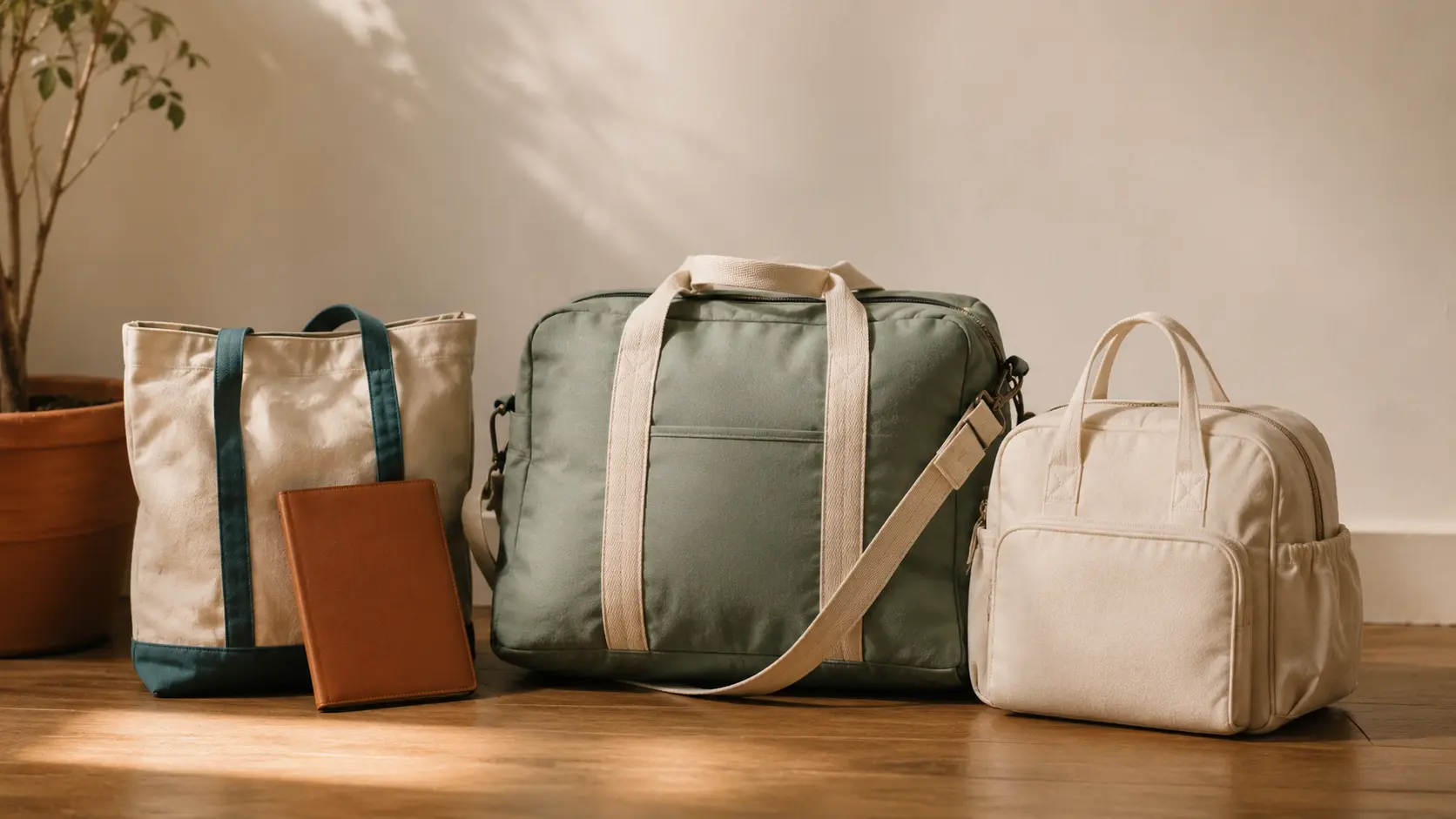
And a fourth thing, which is not a bag: the document folder. It travels with the person driving, not inside the luggage, because it is the first thing anyone asks for at the admission desk and the last thing you want to be digging for.
The document folder — the part no one warns you about
This is the section that separates a hospital bag list written for India from one written anywhere else. Admission in an Indian hospital is a paperwork event, and it happens while you are in no state to be answering questions about your policy number.
Put all of it in one clear folder. Then photograph every page and keep the photos in a shared album your partner can also open — phones get left in rooms, and folders get put down.
- Hospital registration card or booking file number.
- Your ID and your partner's — Aadhaar card is the one most often asked for.
- Health insurance card, policy document, and the TPA pre-authorisation form if your hospital has already started that process. Begin the pre-authorisation weeks before your due date, not on the day.
- Your complete antenatal file: every scan report, every blood test, and the growth scans from the third trimester.
- Your blood group report, and ideally your partner's too.
- Any prescriptions you are currently on, and a written note of any allergies.
- Your doctor's contact number, written on paper as well as saved in a phone.
- Cash. Not everything at 2am accepts a card or a UPI payment — the pharmacy counter and the canteen in particular.
What to pack for yourself
For the labour room
Keep this genuinely small. Most of what gets packed for labour never comes out of the bag. What does get used, gets used constantly.
- A hair tie, and a second one. This is the single most requested item and the most commonly forgotten.
- Lip balm. Labour rooms are air-conditioned and dry, and breathing through contractions cracks lips quickly.
- A water bottle, ideally one with a straw so you can drink lying down.
- Warm socks. Feet get cold, and the floor is cold.
- Your phone and a long charging cable — the wall socket is rarely near the bed.
- A light shawl or dupatta. Hospital wards are air-conditioned and cold year round, whatever the weather outside.
For the days after
You will be on the ward for roughly two days after a normal delivery and three to four after a caesarean. Pack for that, plus one extra day.
- Two or three nightgowns that open at the front. Front-opening is not a preference — it is what makes feeding possible without undressing. Loose cotton, dark colours.
- Maternity pads, at least two packs. Bleeding in the first two days is heavier than most first-time mothers expect, and running out at night is a miserable way to find that out.
- Adult disposable underwear, or several pairs of old cotton underwear you will not mind discarding.
- Two nursing bras, a size up from your current one — your size changes when your milk comes in.
- Nursing pads.
- Flat slippers with a back strap. Ward floors are often wet, and open flip-flops are unsafe when you are unsteady.
- Toiletries, including a toothbrush, your own soap and a towel. Hospital towels are thin and there are rarely enough of them.
- A comb, hair oil, and whatever small thing makes you feel like yourself. Do not underestimate this one.
- Loose, comfortable clothes to go home in — roughly what fit you at six months pregnant, not what fit you before.
- Any medication you take regularly, in its original packaging.
What to pack for the baby
Less than you think. A newborn in a hospital spends most of the time swaddled and feeding, and hospitals that supply clothes supply enough for the stay. The bag that matters is the one for going home.
- Four to six newborn cotton onesies or jhablas, washed before you pack them. New fabric straight off the shelf is stiff and carries factory sizing.
- Two or three soft muslin swaddle cloths.
- Newborn nappies — a pack is plenty, and buy the newborn size, not size 1.
- Cotton wool and a soft towel for cleaning. Wipes are convenient but many pediatricians prefer plain cotton and warm water for the first weeks.
- Mittens, socks and two soft caps.
- A warm blanket or a wrap for the journey home, appropriate to the season.
- The going-home outfit, kept separate and on top so it is easy to find.
- A car seat, if you are travelling by car. Adult arms are not a restraint, and the drive home is the baby's first journey.
What you do not need to bring: bottles, formula, a pillow, oils or powders. If any of those become necessary, the hospital will tell you, and your pediatrician should be the one deciding.

The bag nobody packs: for whoever stays with you
In most Indian hospitals someone stays with you overnight — your husband, your mother, your mother-in-law. It is assumed rather than arranged, which is exactly why nobody packs for it. That person then spends two nights on a chair or a fold-out bed in the same clothes.
It takes ten minutes to prevent, and the person who is going to be running to the pharmacy at midnight will be far more useful having slept.
- Two changes of clothes, and a light blanket or shawl — the attendant's chair is not near the warm side of the room.
- Their own toiletries and a towel.
- A phone charger of their own, and a power bank. There will be one accessible socket and it will be needed by three devices.
- Snacks and a water bottle. Hospital canteens keep their own hours.
- Cash in small notes.
- A list of who to call, in what order, and what to say. Written down, so the news does not depend on one exhausted person remembering.
If you are having a caesarean, add these
A planned C-section changes the packing in three ways: you will be there longer, you will be less mobile for the first day or two, and everything that touches your waistline matters.
- High-waisted cotton underwear that sits well above the incision. Anything that sits on the scar line will be uncomfortable for weeks.
- An extra day or two of clothes — a caesarean stay is typically three to four days rather than two.
- An abdominal binder, if your doctor has advised one. Ask first; it is not a default, and the right time to start using it is your doctor's call.
- Loose kaftans or very loose nightgowns rather than anything fitted.
- A small pillow or a folded towel to press against your abdomen when you cough, laugh or get up. It helps more than it sounds like it will.
- Everything within arm's reach of the bed on day one — a low bedside bag rather than a suitcase across the room.
What not to pack
Half of a first hospital bag comes home unopened. These are the things that consistently do:
- Jewellery, and anything else of value. Wards are busy and things are put down and forgotten.
- Books and anything requiring sustained attention. Nobody reads. You will sleep, or you will be feeding.
- Your pre-pregnancy clothes for going home. Your body needs weeks, not days.
- A large supply of newborn nappies — buy one pack, see how the baby is sized.
- Anything electrical that needs a socket you have not confirmed exists.
- Strong perfumes or scented lotions. Newborns feed by smell, and yours is the one that should be there.
The complete hospital bag checklist
Tick items off as you pack, or print it and keep the printable version in the bag. Your ticks are saved on this device, so you can come back to it — nothing is sent to us.
0 / 43
Documents (keep with the driver)
0/8The first thing asked for at admission. One folder, plus photos of every page on two phones.
Labour bag (small — this one comes into the room)
0/6For you, after
0/10Two days for a normal delivery, three to four after a caesarean — pack for that plus one.
For the baby
0/8For whoever stays with you
0/6Someone will be there overnight. Almost nobody packs for them.
Add if it is a caesarean
0/5The part after the bag
A packed bag is the last thing on most third-trimester lists, and it is genuinely the easier half. The harder question arrives about six hours after you get home, when the hospital's routine is gone and it is just you, a newborn and a body that has been through something significant.
That is worth preparing for with the same seriousness as the bag — who is cooking, who is answering the door, who is helping you bathe the baby the first few times, and who is looking after your own recovery rather than only the baby's needs. Traditionally in India that role had a name and a person: the japa maid, the malish wali, the grandmother who moved in for forty days.
If that person is not available to you — and for a great many families in Pune now, she is not — it is worth deciding early what takes her place, rather than in week two when you are too tired to arrange anything.
This is a practical packing guide, not medical advice. Every pregnancy and every hospital is different — your doctor's instructions and your hospital's own admission list always take precedence over anything here.